
If you teach yoga long enough, you will eventually run into the reality of mixed level classes.
In theory, yoga classes are often labeled as beginner, intermediate, or advanced. In practice, that neat separation rarely exists. Most classes are a mix of students with very different levels of experience, strength, mobility, and confidence.
You may have someone walking into their very first yoga class practicing right beside someone who has been practicing for fifteen years. One student might be flexible but lack stability. Another might be strong but quite stiff. Someone else may be working around an injury. Another student may be physically capable but mentally exhausted.
This is the real classroom of yoga.
For many teachers, especially newer teachers, mixed level classes can feel intimidating. How do you keep beginners safe without boring experienced students? How do you challenge some students without putting others into survival mode?
The answer is not to try to satisfy everyone perfectly. The answer is to build a structure that allows different students to participate at different depths within the same practice.
Here are a few principles from my “Sequence Smarter” framework that make teaching mixed level yoga classes much easier.
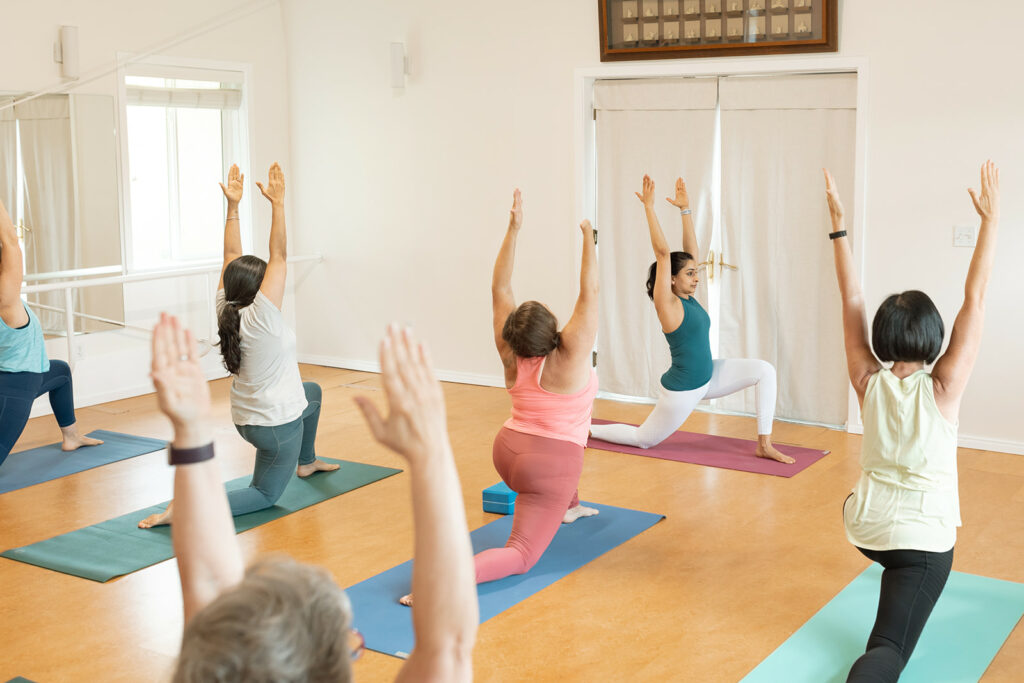
Start With the Reality That Mixed Levels Are the Norm
One of the biggest mistakes teachers make is thinking mixed level classes are the exception. They are actually the norm in most yoga studios.
Once you accept that reality, your mindset shifts. Instead of trying to design a perfectly leveled class, you begin to design a flexible experience.
Your role becomes less about choreographing identical poses for everyone and more about guiding students through a shared practice where the intensity & duration can vary.
When done well, mixed level classes create a beautiful sense of community. Beginners feel supported, and experienced practitioners still find depth in the practice.
Build a Sequence That Includes a Little Bit of Everything
One of the easiest ways to teach a mixed level class is to avoid building the entire sequence around one extremely demanding element.
Instead, think of the class as offering a balanced experience of yoga asana.
A well structured class might include a gentle warm up, several standing poses, a balance pose, a twist, one or two backbend, some strengthening work, mild to moderate inversions and then a gradual slowing down toward the end of class. What we call “down regulating” in yoga.
This variety gives different students different entry points into the practice.
A student who struggles with balance might enjoy the backbends. Someone who feels stiff may appreciate the twists. Another student might enjoy the strengthening work.
When a class includes a little bit of everything, more students are able to find moments where they feel successful.
Always Have One Progression and One Regression Ready
A very helpful strategy when teaching mixed level classes is to think in layers.
For most poses in your sequence, it helps to have two additional options in mind.
One option simplifies the pose and provides support. Another option increases the challenge.
For example, if you are teaching plank pose, one student might keep their knees on the floor. Another student might stay in a standard plank. Someone else may explore side plank or another variation of a single leg plank.
All students remain within the same movement pattern, but the intensity changes depending on the student’s needs. As the yoga teacher in the room, you provide the “options” or “lanes” and let them pick.
This approach keeps the class unified while allowing students to adjust the difficulty appropriately.
Choose the Middle Path
When planning a mixed level class, it is often helpful to aim for the middle lane of difficulty.
If the class is built primarily for advanced students, beginners can quickly feel overwhelmed. They may spend the entire class trying to keep up and miss the deeper benefits of the practice.
If the class is too basic, experienced practitioners may disengage.
The middle path means selecting poses that are accessible but still rich enough to explore.
Poses like Warrior Two, Triangle, Bridge, Low Lunge, and Half Split work well because they are adaptable. A beginner can approach them gently, while a more experienced practitioner can explore deeper layers of stability, alignment, and breath.
The goal is not to make the practice impressive. The goal is to make it meaningful.
Consider Teaching a Theme Instead of a Peak Pose
Peak pose sequencing has become very popular in modern yoga classes. While it can work in certain contexts, it can also create challenges in mixed level environments.
If the entire class builds toward a demanding pose like a deep backbend or an arm balance, students who cannot access that pose may feel left out.
Instead, consider building the class around a theme.
You might explore hip stability, spinal rotation, grounding through the feet, or opening the chest. A theme allows students of different levels to explore the same concept in their own way.
This approach shifts the focus away from achieving a specific pose and toward understanding how the body works.
Become More Pose Literate
The deeper your understanding of yoga poses becomes, the easier mixed level classes are to teach.
Pose literacy means understanding what a pose is doing in the body. It means recognizing the key actions of the pose and knowing where students commonly struggle.
For example, Warrior Two can be made more or less intense simply by adjusting stance, depth of the front knee bend, arm position, number of repetitions or how we enter the pose.
The outer shape of the pose remains the same, but the internal experience changes.
Teachers who understand poses deeply have far more flexibility when working with a room of diverse students.
Listen to this episode of the Let’s Talk Yoga podcast about what it means to be pose literate and what’s included in it.
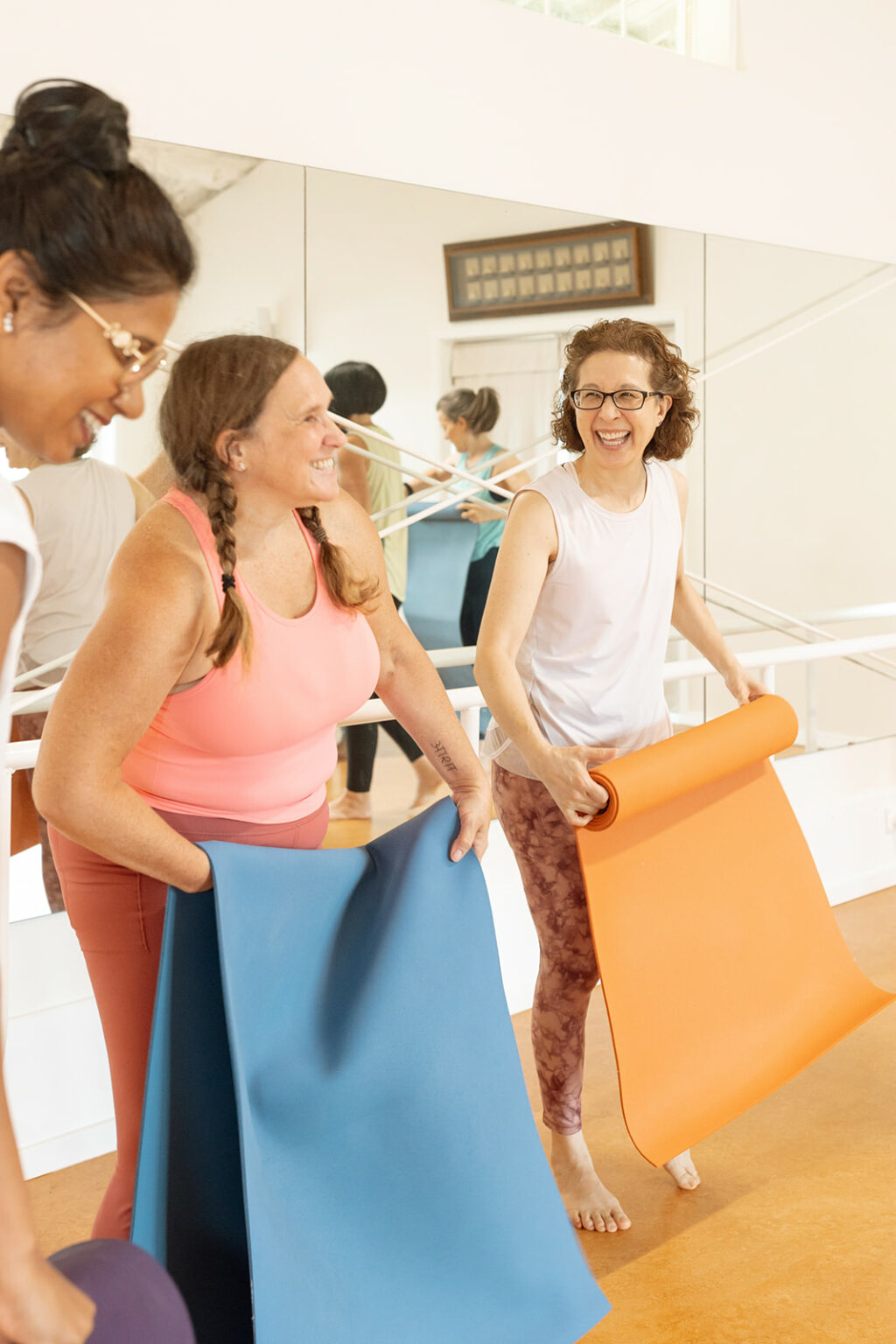
Set the Tone at the Beginning of Class
Mixed level classes work best when students understand that options are part of the practice.
It helps to say something simple at the start of class. Let students know that variations will be offered and that choosing wisely is part of practicing yoga.
Encourage students to rest when needed. Normalize Child’s Pose or pauses throughout the class.
This helps remove the pressure beginners often feel to keep up with everyone else.
Use Props and Pacing Wisely
Props can make a huge difference in mixed level classes. Blocks and straps help bridge the gap between different levels of flexibility and strength.
Pacing also matters. Moving slightly slower allows beginners to process instructions while still giving experienced students time to refine the pose.
A rushed class tends to leave beginners confused and experienced students disconnected.
The Goal of a Mixed Level Class
A mixed level class does not mean every student performs the exact same pose.
It means everyone participates in the same journey, but the depth of the experience can vary.
When taught thoughtfully, mixed level classes can be some of the most rewarding environments to teach. They allow beginners to grow while experienced practitioners continue to refine their understanding.
Over time, students begin to realize something important.
Yoga is not about performing the most advanced shape in the room. It is about learning how to practice intelligently within the body you have.
Warmly,
Aru
PS. Remember to subscribe to my Let’s Talk Yoga podcast for free weekly yoga teacher resources. Take advantage of my YouTube Channel or show up online or in-person at Aham Yoga to practice asana with me.
